Hello delegates of the committee of the United Nations that is SOCHUM,
In order for our interaction with you to be as efficacious as possible, it is best that we offer you a brief introduction to ourselves.
I am called Zohaib. I am a third year Neuroscience student at the University of Alberta. However, you shall know me only as your chair. I will be responsible for running your committee sessions, deciding if motions are in order and moderating discussions. I am also quite awesome. Remember these facts as they will be pertinent for you to succeed in the committee of Social. Cultural,and Humanitarian Affairs.
Greetings delegates. My name is Jonathan Chu and I am a first year Science student at the University of Alberta. You can call me Director Chu. I will only respond to said title. I am the director for SOCHUM, and I will be responsible for many of the same tasks as your chair, in addition to proofreading your resolutions. I am also awesome, but not as awesome as your chair. At the conference, don't forget my title. Or else.
Hey there! My name is Amy Smith and I am in my first year in the Arts at U of A, and I am the attache for this amazing committee of SOCHUM!! Any time you have any questions about your foreign policy feel free to ask me. Also I will help guide you in the right direction to maximize your participation and fully enjoy your experience with us at this conference! I believe we are ALL awesome and we will spread this awesomeness.
However if your DAIS and I find that you are not representing your country, that awesomeness will turn to wrath, and I will intervene you right in the face.
See you there :)
Your leaders,
Awesome, Awesomer, Awesomest
Saturday, November 5, 2011

Historical Committee Welcomes You
Hello future delegates!
Yay, blogging!
We've got a pretty big group of helpful and talented staff for this brand new committee.
My name is Robert Lees-Miller, I am going to be the chair for the committee this year. This is my fourth year as a chair in HSMUN, and I've been once as a delegate. I've done two historical committees as a delegate, once with the Cuban Missile Crisis, and the other the Independence of Bangladesh. I am quite excited to be on the other side of the box this year.
My name is Blue Knox, this is my first year working as staff with HSMUN and I so excited to be getting involved and helping to make this the best experience possible for you guys. I participated once as a delegate 2009 and am excited to be joining the dark side with the other talented staff on this committee.
My name is Thomas Kearns and this is my first time on HSMUN, so I'm hoping to learn a lot from the experience and hopefully help make sure you guys have a blast as well.
We've also got two super classified secret agents you'll meet at the conference.
We'll have some real material for you at some point, until which YouTube videos:
Good hunting,
Historical Committee Staff
Yay, blogging!
We've got a pretty big group of helpful and talented staff for this brand new committee.
My name is Robert Lees-Miller, I am going to be the chair for the committee this year. This is my fourth year as a chair in HSMUN, and I've been once as a delegate. I've done two historical committees as a delegate, once with the Cuban Missile Crisis, and the other the Independence of Bangladesh. I am quite excited to be on the other side of the box this year.
My name is Blue Knox, this is my first year working as staff with HSMUN and I so excited to be getting involved and helping to make this the best experience possible for you guys. I participated once as a delegate 2009 and am excited to be joining the dark side with the other talented staff on this committee.
My name is Thomas Kearns and this is my first time on HSMUN, so I'm hoping to learn a lot from the experience and hopefully help make sure you guys have a blast as well.
We've also got two super classified secret agents you'll meet at the conference.
We'll have some real material for you at some point, until which YouTube videos:
Good hunting,
Historical Committee Staff
SUIT UP SECURITY COUNCIL!!!
Guten day my friends! My name is Josh and I am a 3rd year honours political science student. I have the pleasure of being the chair for this year's Security Council! I have traveled the world and done some sketchy things and bring that knowledge to you (on an unrelated note, it is possible to speed up border-crossing processing if you give Mozambican officials a 2 litre of coke and a bag of salt-and-vinegar chips). I was a delegate for 2 years and a volunteer for 3 years so I can help you as you debate the socks off of your fellow delegates!
Hola chicos! I'm Aaron and I am going to be your Intervention Attache for this year's council. This will be my 3rd year involved in this conference and am stoked to be back! I am also a 3rd year political science major/sociology minor with a certificate in global governance. During the federal election I was a campaign manager for a candidate, as well I worked with the government during the summer writing policy. Just remember to do your research otherwise you will get a really embarrassing letter getting you "back on track"; but that shouldn't be a problem right ;) good luck and have fun...merry Christmas, happy new year and such...
Hello! I am Shazia and am a first year science student and will be the director of this year's Security Council. This will be my first year involved in the council, so for those of you newbies, were in the same boat. However, I have always had a keen interest in international relations and in high school I was a part of a very similar group to HSMUN, I too have participated in some pretty intense conference debates. The most important thing is to have a clearly defined position and stick with it. Good luck...look forward to meeting you!
Hola chicos! I'm Aaron and I am going to be your Intervention Attache for this year's council. This will be my 3rd year involved in this conference and am stoked to be back! I am also a 3rd year political science major/sociology minor with a certificate in global governance. During the federal election I was a campaign manager for a candidate, as well I worked with the government during the summer writing policy. Just remember to do your research otherwise you will get a really embarrassing letter getting you "back on track"; but that shouldn't be a problem right ;) good luck and have fun...merry Christmas, happy new year and such...
Hello! I am Shazia and am a first year science student and will be the director of this year's Security Council. This will be my first year involved in the council, so for those of you newbies, were in the same boat. However, I have always had a keen interest in international relations and in high school I was a part of a very similar group to HSMUN, I too have participated in some pretty intense conference debates. The most important thing is to have a clearly defined position and stick with it. Good luck...look forward to meeting you!
Wednesday, February 23, 2011
Last Minute Ideas!
Hello, hello!
Tomorrow is the big day and we are all excited to see you guys!
I have been reading through background papers all week and am pleased to say that you have given us some really quality stuff; from plain awesome, to funny, to witty- it will be difficult to make our award decisions.
One thing I have noticed as I have been going through them though, is that some of you know your nations mindset on the topics we will be discussing, but didn't focus as much on what possible solutions your country would prefer or refuse. Try thinking of a few ideas before debate starts up and it might make it a little bit easier for you :)
For those of you doing some last minute research try taking a look around these sites:
- CIA World Factbook: This website has statistics and general information on all the countries and is generally a good starting point- https://www.cia.gov/library/publications/the-world-factbook/
- The government website for your nation: This is where you are most likely to find specific policies that your nation has on topics, search around a little and you could get some golden information (if you don't already know what it is try Google-ing "government website
" and the site should pop up) - WikiLeaks: Well we all know what this site is. WikiLeaks could be a useful information source to find out government's 'real' policies, not just the ones that they post for everyone, including their enemies to see. It's set up just like Wikipedia so searching on it shouldn't be too difficult- http://www.wikileaks.ch/wiki/Main_Page
If you have any last minute questions I will be checking the email regularly tonight and a little bit in the morning as well so feel free to send in your questions (hsmun.unodc@gmail.com)
I hope that some of these suggestions might help you get ready for tomorrow, I can't wait to see all of you!
Lauren
P.S. For those first time HSMUN-ers coming out tomorrow here is a quick word of advice that I learned during my time as an HSMUN delegate: Once you know the basics of how your country views the topics and who their allies are don't be afraid to step out of your box and make decisions; Be confident in what you know, it is your job to represent your nation so stand up and make your voice heard! (it's more fun that way anyway XD ))
Here are some last minute research suggestions for those of you in the WHO.
As you know, natural disasters cause a variety of challenges to a nation's health care. I found this paper a concise and clear list of issues. The author draws attention to the impact of the politically charged and emotional climate that is associated with the the time immediately following a natural disaster. Political considerations often get in the way of an effective response to the disaster. You should consider how you might address this issue in working papers.
The author also suggests several cost-effective ways of responding to natural disasters. For instance, the author argues that it is important for a nation dealing with a natural disaster to prepare a list of what they need, as opposed to other nations simply giving "unsolicited donations". These donations can cause a lot of problems, and may not be helpful.
This paper is longer and more technical, but may also be useful. On page 4 there is a list of health priorities after an earthquake - particularly relevant, perhaps, because of the recent earthquake in New Zealand. On page 8, there is a section on "response and rehabilitation" which discusses issues associated with international aid - probably the most relevant section in the paper to the topic that you will be addressing.
Goodluck, and see you tomorrow!
As you know, natural disasters cause a variety of challenges to a nation's health care. I found this paper a concise and clear list of issues. The author draws attention to the impact of the politically charged and emotional climate that is associated with the the time immediately following a natural disaster. Political considerations often get in the way of an effective response to the disaster. You should consider how you might address this issue in working papers.
The author also suggests several cost-effective ways of responding to natural disasters. For instance, the author argues that it is important for a nation dealing with a natural disaster to prepare a list of what they need, as opposed to other nations simply giving "unsolicited donations". These donations can cause a lot of problems, and may not be helpful.
This paper is longer and more technical, but may also be useful. On page 4 there is a list of health priorities after an earthquake - particularly relevant, perhaps, because of the recent earthquake in New Zealand. On page 8, there is a section on "response and rehabilitation" which discusses issues associated with international aid - probably the most relevant section in the paper to the topic that you will be addressing.
Goodluck, and see you tomorrow!
The Big Bad MUN Guide, Part Three
Delegates!
Wait no longer, for the third and final instalment has arrived! Click on the link below to read! Please not also that changes have been made to Part Two, just 'cause I loves ya' and I wants to help ya' learns.
The Big Bad MUN Guide, Part Three
See you tomorrow!
Wait no longer, for the third and final instalment has arrived! Click on the link below to read! Please not also that changes have been made to Part Two, just 'cause I loves ya' and I wants to help ya' learns.
The Big Bad MUN Guide, Part Three
See you tomorrow!
Conference Update and Welcome from the S-G
Hey HSMUNers!!!!
Tomorrow is an exciting day...HSMUN 2011 finally arrives! We are so excited to welcome you all to the University of Alberta's beautiful campus for an epic three days of diplomacy, debating, and discussion. Your HSMUN team here at the U of A has been hard at work all year making sure this conference will be a great experience for all of you, and the campus has been buzzing all week with HSMUN preparations.
With the conference being only 26 hours away, I can imagine you must all be waiting in eager anticipation, but perhaps you are a bit nervous as well. If you are feeling unprepared, or if this is your first time at HSMUN and you don't know what to expect, don't worry, I have a few last minute tips for you! Try to relax tonight, since the next three days will be jam-packed with HSMUN excitement. Look over your foreign policy, review the background papers, and do a bit of last minute research. Check out the latest editions of the "Daily Delegate" newspaper and give the blog a read. Leave yourself lots of time to get to campus tomorrow, so you are not stressed, and come with a good attitude! If you are worried about the conference, take a deep breath and relax - it will be a lot of fun!
Just a reminder that the dress code for the conference is business attire, and you are required to follow the dress code for the duration of the conference (including tomorrow night!)
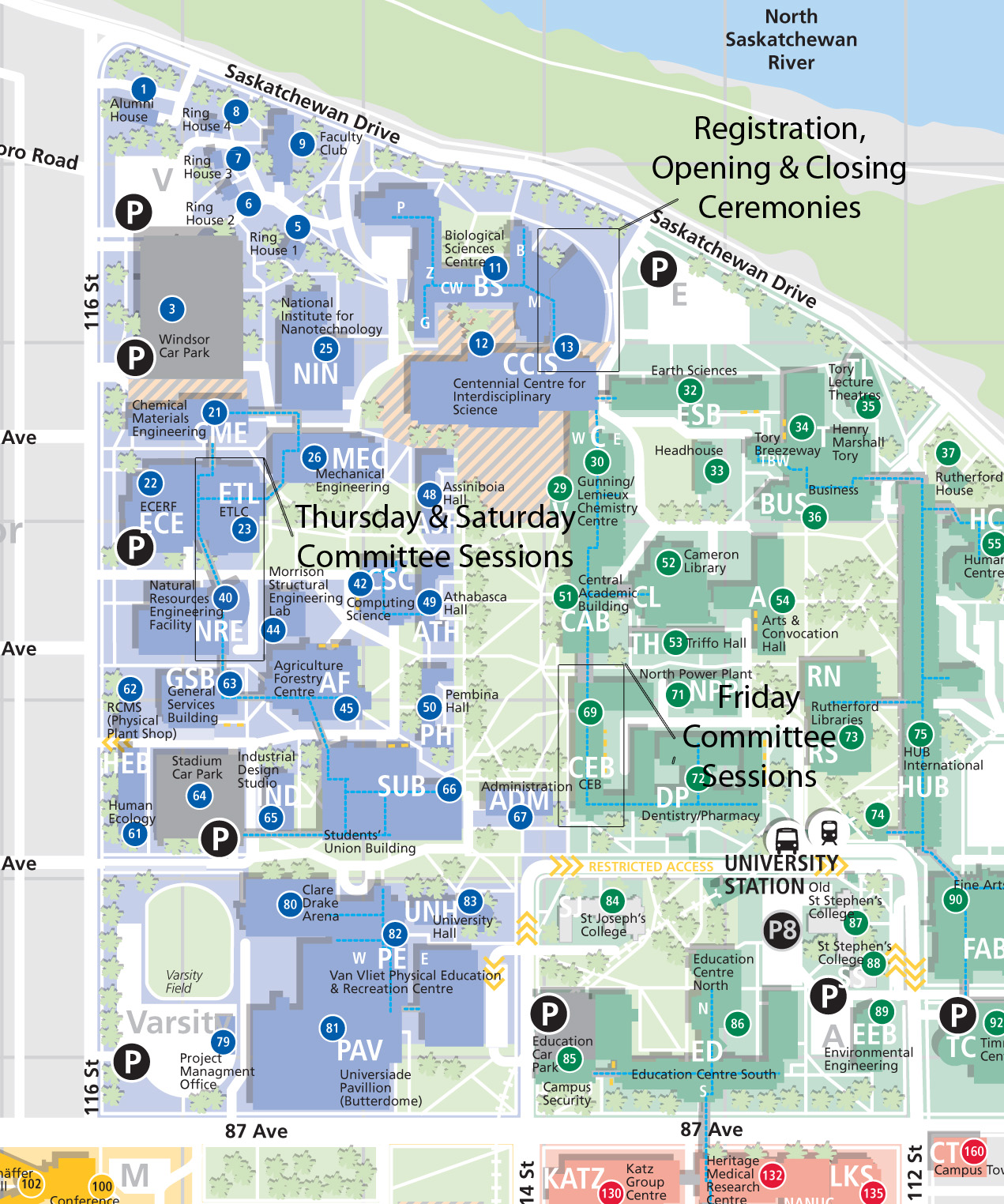
Also, below is a schedule of the conference, which I would recommend looking over.
I am so excited to meet you all tomorrow, and see you all in HSMUN action! I hope that you are all just as excited as I am!
See you tomorrow!!!!
Maggie Danko
Secretary General
HSMUN 2011
Registration
Registration is in the CCIS/BioSci atrium from 6:00pm to 6:25pm. We ask that everyone is seated by 6:30pm for Opening Ceremonies to commence. If anyone misses registration, they can pick up their registration package from their dias staff in the committee rooms at 8:00pm. We look forward to seeing everyone at HSMUN 2011!
Schedule
Thursday, February 24th
6:00-6:25pm - Registration - CCIS Atrium
6:30-8:00pm - Opening Ceremonies, Secretary-General's Address, Mock Debate - CCIS 1-430
8:00-9:00pm - Committee Sessions - NREF/ETLC
Friday, February 25th
9:00am-12:00pm - Committee Sessions - CEB
12:00pm-1:00pm - Lunch (not provided) - SUB is recommended
1:00pm-4:00pm - Committee Sessions - CEB
6:30pm-12:00am - Banquet, Keynote Address and Dance - Fantasyland Hotel
Saturday, February 26th
9:30am-12:00pm - Committee Sessions - NREF/ETLC
12:00pm-1:00pm - Lunch (provided) - NREF/ETLC
1:00pm-2:00pm - Plenary - CCIS
2:00pm-3:00pm - Closing Ceremonies - CCIS
Locations on Campus
If you do not know where the various buildings are on campus, please use this map. The Fantasyland Hotel Banquet facilities are located at West Edmonton Mall, through Entrance #52.
Tomorrow is an exciting day...HSMUN 2011 finally arrives! We are so excited to welcome you all to the University of Alberta's beautiful campus for an epic three days of diplomacy, debating, and discussion. Your HSMUN team here at the U of A has been hard at work all year making sure this conference will be a great experience for all of you, and the campus has been buzzing all week with HSMUN preparations.
With the conference being only 26 hours away, I can imagine you must all be waiting in eager anticipation, but perhaps you are a bit nervous as well. If you are feeling unprepared, or if this is your first time at HSMUN and you don't know what to expect, don't worry, I have a few last minute tips for you! Try to relax tonight, since the next three days will be jam-packed with HSMUN excitement. Look over your foreign policy, review the background papers, and do a bit of last minute research. Check out the latest editions of the "Daily Delegate" newspaper and give the blog a read. Leave yourself lots of time to get to campus tomorrow, so you are not stressed, and come with a good attitude! If you are worried about the conference, take a deep breath and relax - it will be a lot of fun!
Just a reminder that the dress code for the conference is business attire, and you are required to follow the dress code for the duration of the conference (including tomorrow night!)
Also, below is a schedule of the conference, which I would recommend looking over.
I am so excited to meet you all tomorrow, and see you all in HSMUN action! I hope that you are all just as excited as I am!
See you tomorrow!!!!
Maggie Danko
Secretary General
HSMUN 2011
Registration
Registration is in the CCIS/BioSci atrium from 6:00pm to 6:25pm. We ask that everyone is seated by 6:30pm for Opening Ceremonies to commence. If anyone misses registration, they can pick up their registration package from their dias staff in the committee rooms at 8:00pm. We look forward to seeing everyone at HSMUN 2011!
Schedule
Thursday, February 24th
6:00-6:25pm - Registration - CCIS Atrium
6:30-8:00pm - Opening Ceremonies, Secretary-General's Address, Mock Debate - CCIS 1-430
8:00-9:00pm - Committee Sessions - NREF/ETLC
Friday, February 25th
9:00am-12:00pm - Committee Sessions - CEB
12:00pm-1:00pm - Lunch (not provided) - SUB is recommended
1:00pm-4:00pm - Committee Sessions - CEB
6:30pm-12:00am - Banquet, Keynote Address and Dance - Fantasyland Hotel
Saturday, February 26th
9:30am-12:00pm - Committee Sessions - NREF/ETLC
12:00pm-1:00pm - Lunch (provided) - NREF/ETLC
1:00pm-2:00pm - Plenary - CCIS
2:00pm-3:00pm - Closing Ceremonies - CCIS
Locations on Campus
If you do not know where the various buildings are on campus, please use this map. The Fantasyland Hotel Banquet facilities are located at West Edmonton Mall, through Entrance #52.
Regulating Alternative Medicines
One method that many nations are beginning to use to ensure the safety and reliability of alternative medicines and therapies is to introduce regulations about the type of education required to administer these therapies and to develop and accredit programs that educate students on the proper administration of alternative medicines. For example, in Australia, there is a Bachelor of Health Sciences in Western Herbal Medicine that is accredited by the government. Australia also has many professional organizations for traditional medicine providers, which are monitored by the government to ensure that professional misconduct does not occur.
What does your nation do to ensure that available alternative medicines are available in a reliable, safe manner, as opposed to the image many have of these therapies being administered by a white-haired old lady in her living room?
The risks of unregulated alternative medical treatments are quite high, as many of the herbal remedies contain toxins which are beneficial in low doses, but very harmful in higher doses. However, it is hard to control the exact amount of toxin in an herb, as opposed to the refined compound that can be obtained with a prescription. Regulation of alternative medical treatments will also ensure that standards regarding the cleanliness of the office and practitioner are in place to prevent the risks of infections.
What does your nation do to ensure that available alternative medicines are available in a reliable, safe manner, as opposed to the image many have of these therapies being administered by a white-haired old lady in her living room?
The risks of unregulated alternative medical treatments are quite high, as many of the herbal remedies contain toxins which are beneficial in low doses, but very harmful in higher doses. However, it is hard to control the exact amount of toxin in an herb, as opposed to the refined compound that can be obtained with a prescription. Regulation of alternative medical treatments will also ensure that standards regarding the cleanliness of the office and practitioner are in place to prevent the risks of infections.
Illicit Drug Crops: Why Farmers Continue to Choose Them
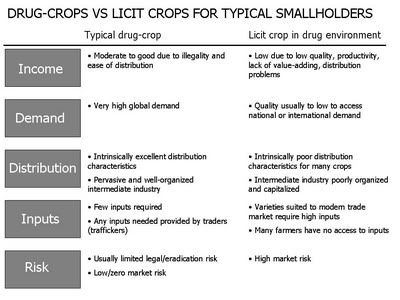
One of the major problems in trying to eradicate illicit drug crops is answering the question of "What will the drug farmers and their families do for income without the crop?" This is a major issue, as drug crops are much more profitable than traditional food crops for the farmers. For an initiative to eradicate these crops to be successful, part of the focus needs to be on the farmers themselves. Otherwise, for each crop that is wiped out, another drug crop will be planted by another financially destitute farmer! In addition, these farms are often in debt to organized narcotics criminals, so the farmers need to continue producing the drug crops to ensure the safety of themselves and their families!
Some initiatives that have been suggested include reducing the market risk for the farmers by ensuring a reasonably priced domestic market or by providing a domestic market with supply-based government subsidization; provision of the specialty crop strains and access to supplies that allows the developed world to produce higher quality and higher yield crops (e.g. having a community tractor that all the small farmers can sign up to use); and development of privately or nationally owned processing and distribution industries. The initiatives also need to look at methods to ensure the personal safety of farmers that are transitioning away from illicit drug crops.
Each nation should ask themselves what aspect of illicit drug crops their nation has problems with, and consider what types of solutions both address the problem and fit their nation's international development aid targets.
A prior agreement on human trafficking for the purposes of crime:
Currently, the UNODC works with under the United Nations Convention against Transnational Organized Crime when it is working to address the trafficking of humans for the purposes of drug trafficking and drug-related crime. One protocol of the convention is the Protocol to Prevent, Suppress and Punish Trafficking in Persons, Especially Women and Children. This is an essential part of any agreement on transnational organized crime, such as the narcotics trade, as these people are often trafficked into a nation on the pretense of providing them with a better life, then the people who assisted them with their illegal immigration will exploit the debt (perceived or true) to force these people to commit crimes, for example selling or transporting drugs, on their behalf.
This convention is particularly beneficial to the victims of these crimes, as it aims both to prevent trafficking from occurring, and to protect and assist the victims of trafficking This means that states that are party to the convention cannot punish victims of trafficking for having been trafficked. The definition of human trafficking in the convention, "the recruitment, transportation,transfer, harbouring or receipt of persons, by means of the threat or use of force or other forms of coercion, of abduction, of fraud, of deception, of the abuse
of power or of a position of vulnerability or of the giving or receiving of payments or benefits to achieve the consent of a person having control over another person, for the purpose of exploitation," makes it clear that the states that are party to the convention believe that individuals who have been trafficked are victims, which is shift from some previously accepted definitions that stated that people who have been trafficked with complicit in the crimes.
You can check your nation's support of this convention and the trafficking of persons protocol on the summary of signatures and ratifications as at September 29, 2010.
Also of interest on this topic, there is a charity in the UK that works with female victims of human drug-related trafficking. They have the text of an interview about human drug trafficking on their website.
This convention is particularly beneficial to the victims of these crimes, as it aims both to prevent trafficking from occurring, and to protect and assist the victims of trafficking This means that states that are party to the convention cannot punish victims of trafficking for having been trafficked. The definition of human trafficking in the convention, "the recruitment, transportation,transfer, harbouring or receipt of persons, by means of the threat or use of force or other forms of coercion, of abduction, of fraud, of deception, of the abuse
of power or of a position of vulnerability or of the giving or receiving of payments or benefits to achieve the consent of a person having control over another person, for the purpose of exploitation," makes it clear that the states that are party to the convention believe that individuals who have been trafficked are victims, which is shift from some previously accepted definitions that stated that people who have been trafficked with complicit in the crimes.
You can check your nation's support of this convention and the trafficking of persons protocol on the summary of signatures and ratifications as at September 29, 2010.
Also of interest on this topic, there is a charity in the UK that works with female victims of human drug-related trafficking. They have the text of an interview about human drug trafficking on their website.
Tuesday, February 22, 2011
The Big Bad MUN Guide, Part Two
Delegates!
There are mere days left before the conference! It goes without saying that you're all insanely excited. If any of you grow anxious, wondering "Oh, how oh how can I ever hope to make a good showing at the conference", well, help has arrived. Follow the link below.
The Big Bad MUN Guide, Part Two
Part Three to come shortly. See you soon!
There are mere days left before the conference! It goes without saying that you're all insanely excited. If any of you grow anxious, wondering "Oh, how oh how can I ever hope to make a good showing at the conference", well, help has arrived. Follow the link below.
The Big Bad MUN Guide, Part Two
Part Three to come shortly. See you soon!
Can you do the CanCon?
Hello HSMUN 2011 Delegates!
As you may have heard before, in a lot of countries there exists a content quota for radio and television broadcasters. In Canada, for example, it is required that all channels must air a certain percentage of content that was at least partly written, produced, presented, or otherwise contributed to by persons from Canada.
Similar rules are found across the world- in the Philippines, Mexico, Nigeria, France, Israel,Ireland, South Africa, Jamaica, the United Kingdom, and New Zealand.
Obviously, rules and regulations like this exist to protect and prolong culture. Do you think these means are effective? Are citizens generally influenced by these rules at all, or has media made access to a multitude of outlets so easy that regulations like the aforementioned are ineffective? What are some similar rules/laws exist in your delegation that follow the same mandate?
As you may have heard before, in a lot of countries there exists a content quota for radio and television broadcasters. In Canada, for example, it is required that all channels must air a certain percentage of content that was at least partly written, produced, presented, or otherwise contributed to by persons from Canada.
Similar rules are found across the world- in the Philippines, Mexico, Nigeria, France, Israel,Ireland, South Africa, Jamaica, the United Kingdom, and New Zealand.
Obviously, rules and regulations like this exist to protect and prolong culture. Do you think these means are effective? Are citizens generally influenced by these rules at all, or has media made access to a multitude of outlets so easy that regulations like the aforementioned are ineffective? What are some similar rules/laws exist in your delegation that follow the same mandate?
Saturday, February 19, 2011
Country Rankings
Hello delegates,
Here are a couple more interesting links, mainly with rankings and facts relating to our two issues that may help you with clinching your arguments:
- Statistics on pornography use.
- A summary of a conference on laws regarding online child exploitation. The best part of this site are the links to powerpoint presentations (all safe, I checked), that have very detailed information on laws and definitions regarding our child pornography issue, as well as current trends and developments in law in this area.
- Rankings of malnutrition death rates by country.
- Hunger Notes, a website with tons of information and news articles on region specific malnutrition problems.
By now you should have all the information you need about your country's position (and if you've submitted your position papers, you will have finished this at least a week ago). The best way to prepare now is to keep track of latest developments, and start thinking about how your country would like to resolve this issue - what would you your country like to see on a resolution, what would it agree to? Remember, time freezes when the conference begins, so any news until Thursday evening is fair game, after that, no world developments in either hunger or child exploitation are relevant for the conference. Have fun!
Videos & News in Malnutrition & Exploitation
Hello delegates,
In the search of alternate resources, since filtering through websites and articles on Google gets tedious for all of us, I've found a couple of interesting documentaries and voice interviews about child malnutrition and child online pornography:
- A five part CBC documentary about how police forces in Canada, USA, and England are dealing with child exploitation online (links to further parts on Youtube sidebar).
- A recent BBC debate on the world food crisis.
- A BBC interview with a World Bank spokesman about poverty and the food crisis.
- A long unaired Discovery Channel documentary about a giant child molestation ring in America (which I would only watch if you had a lot of free time; it might be disturbing for some).
- Three shorter documentaries, on on malnutrition in Niger, another on malnutrition in Nepal, and the last on malnutrition in Zambia.
And for some regular non-video news:
- Britain's CEOP releases a new film warning about the dangers of sexting.
- The EU updates its child online pornography laws to include erasing of websites/images.
- The Pakistani flood problems continue, with rising child malnutrition rates.
Hope these help, and remember that due to the seriousness of the topics we are covering, the above documentaries may be disturbing for some so do not watch if you don't think you'd be able to handle it! See you at the conference!
Because Books Still Exist...
Hello UNICEF Delegates,
With the conference less than a week away, I'm sure many of you are frantically researching your country's position on our two topics. Likely, most of your searches are happening online - which is great, since there's tons of information on the internet. But, published books still exist, and can be much better sources of quality information on important issues.
Since most delegates don't think of looking into books, here's a list of relevant books for our two topics that can be borrowed from the Edmonton Public Library (and there are literally hundreds more at the University of Alberta Libraries, which you can borrow if you have a TAL card or a CCID, the first of which you can get at the Stanley A. Milner Library).
Child Malnutrition:
- "Hunger and Health" by World Health Programme (2007)
- "A follow up study of child hunger in Canada" by Human Resources Canada (2001)
- "World Hunger" by Liza Burby (1995)
- "Solutions for the World's Biggest Problems" by Bjorn Lomborg (2007)
Child Pornography:
- "Innocence Exploited" by Canadian Police College (1998)
- "Child Exploitation and Communication Technologies" by Alisdair Gillespie (2008)
- "One Child at a Time" by Julian Sher (2007)
- "Caught in the Web" by Julian Sher (2007)
- "Sex Offenders and the Internet" by Kerry Sheldon (2007)
Especially for the pornography subject, which is hard to research through google, these books can really help for some general information (country specific info can be found through Interpol, which is linked in a previous blog post!).
Usually reading relevant extracts or chapters is enough, it's good to glance into these books even if you don't have time to read them all!
Good luck and see you Thursday!
Subscribe to:
Posts (Atom)

 Posts
Posts